
About the park
Nyerere National Park: the Selous, renamed
Tanzania's largest national park at nearly 31,000 square kilometres, carved out of the old Selous Game Reserve in 2019 and built around the Rufiji River. Boat safaris here, which almost no other Tanzanian park offers.
If you only want the answer
Tanzania's largest park, carved from the old Selous in 2019 with a hydropower dam at its heart and the Rufiji running through everything. Premium fees, wild dog stronghold, and a history with more scars than most.
Selous or Nyerere? Both names are right
The Selous Game Reserve was gazetted in 1922 and became a UNESCO World Heritage site in 1982. In 2019 the northern photographic sector, nearly 31,000 square kilometres of it, was regazetted as Nyerere National Park, named after Tanzania's first president. What remains as Selous Game Reserve is the southern part, where hunting concessions operate.
So if you are booking a photographic safari, you are going to Nyerere. Most operators still say Selous, and both names point to the same riverine landscape. We use Nyerere because that is what the gate says.
Only the northern strip is open, and that changes everything
The park is enormous on paper, but tourism occupies a narrow band in the north between the Matambwe and Mtemere gates. Almost everything south of the Rufiji is closed to photographic safaris.
This has a practical consequence worth planning around: the Matambwe sector and the lake circuit near Mtemere produce measurably different species lists. Giraffe, hartebeest and the miombo birds favour Matambwe and Beho Beho; the lakes favour boat species and hippo. Ask which sector your camp works before you book.
The river and the lakes
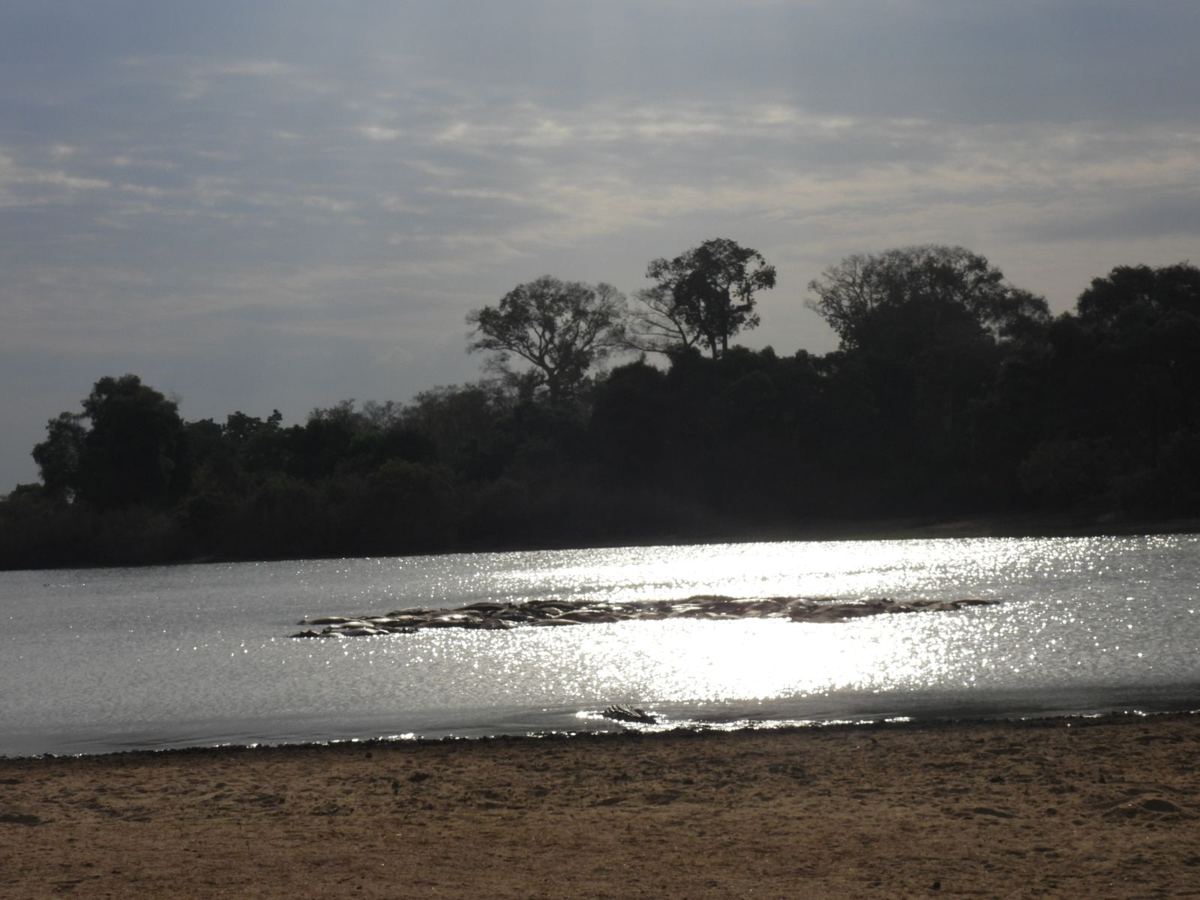
The Rufiji is the largest river in Tanzania and the reason to come. It spreads into a chain of lakes, Manze, Nzerakera and Tagalala, which is what makes boat safaris possible here when they are impossible in Ruaha or the Serengeti.
Stiegler's Gorge, upstream, is now the site of the Julius Nyerere hydropower dam, a project that has been controversial internationally and has changed the upper river. The lakes circuit where tourism happens sits downstream of it.
Choosing between Nyerere and Ruaha?
The southern circuit's two anchors end up on every shortlist together, and we run both guides. The full side-by-side comparison, species by species and dollar by dollar, lives on our sister guide: Ruaha or Nyerere. The one-line version: Nyerere for boats, wild dogs and the river; Ruaha for predators, walking and a conservation fee less than half the price.